
Precise placement provides a 3D scene structure, purpose, and clarity. Layout is the relationship between characters, props, architecture, and camera viewpoints. It creates focus and connections in an environment. This spatial approach is indicated as the way forward for 3D world creation by reported ByteDance research. The idea is still in the future, however, and is not yet a published production tool. Current access claims should not include features that are reported. Pippit offers a practical setting to create structured visual stories using characters, scenes, products, and production assets. It can be used for pre-planning prior to final shots.
Understanding Layout Control as a Spatial System
In Layout control, the objects are deliberately moved in space rather than randomly. Actions can feel central, distant, isolated, or connected depending on the character’s position. Distance impacts visibility, interaction, depth, and visual separation between subjects. Scale is how it conveys whether something is next to a character, in a room, or further into an environment. Hierarchy is created by the visual dominance of the placement of one subject over another. Camera relationships are important since it can vary from one viewpoint to another. This is not like a standard AI video generator that could be centered on creating video sequences from prompts. Pippit can be used to arrange the visual elements as creators determine composition and story direction.

Character and Prop Placement Blueprint
The reported concept for Seeworld layout is to have several elements within a single spatial envelope. When the attention should start, there is often a main character in the foreground or middle-ground. A secondary character may be near the primary character for interaction, or may be physically separated to be visually distinguished. A hero prop can be used to assist an action or have narrative significance. Backdrops can be used to set the scene without distracting from the main activity. Open space can create the boundaries of the environment, and architecture can create breathing room around significant subjects. Pippit also enables similar planning with structured story creation, in which the scenes, characters, products, and assets require roles. Each element has a visual role and is placed accordingly.
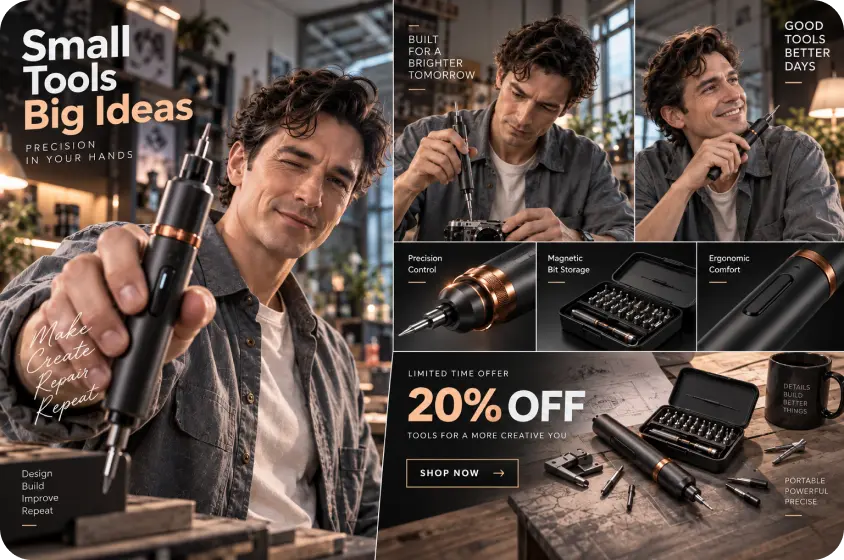
Building a Scene Around Relationships Instead of Isolated Objects
Relationships between elements are essential to creating a convincing 3D scene. Character-to-character relations are defined as distance, direction of facing, interaction areas, and visual separation. The distance between two characters can create a sense of conversation or distance/conflict. The relationships between characters and props are significant if a prop helps to support an action and/or shows scale and/or advances the story. A chair with a seated character is not used in the same way as a chair in a random spot somewhere else. Prop-to-environment relationships need to be grounded, proportioned, and contextually consistent. Foreground to background relationships give depth by positioning of subjects in space. These can be transferred to structured video planning and direction of narratives by Pippit.
Steps to Seeworld Layout Control: Place Characters and Props Exactly in 3D
Step 1: Create the initial 3D layout
- Sign up for Pippit using Google, TikTok, or Facebook account details to arrange three-dimensional layouts.
- Open the “Story Studio” tab from the left vertical menu bar on the home page.
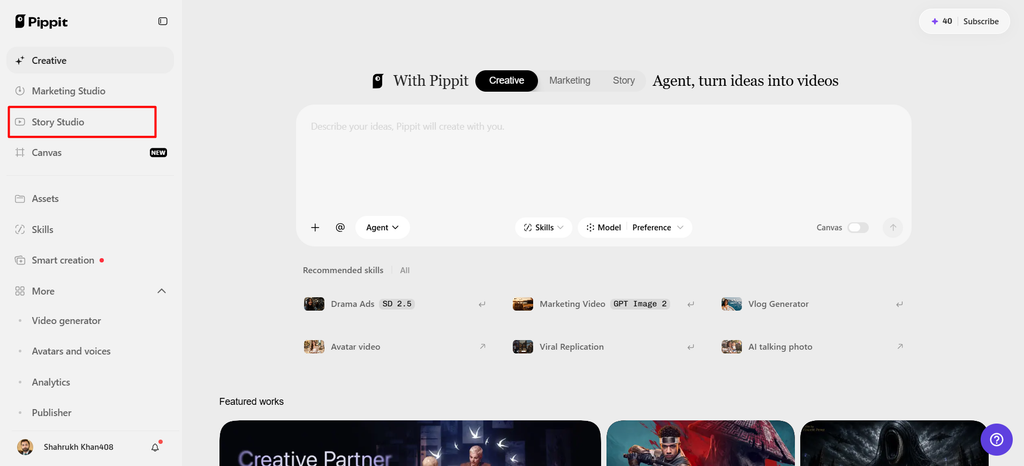
- Upload your script using “Upload script”, or choose “Paste script” to write or paste material.
- Use “AI scriptwriter” from the top menu to create a fresh script for your concept.
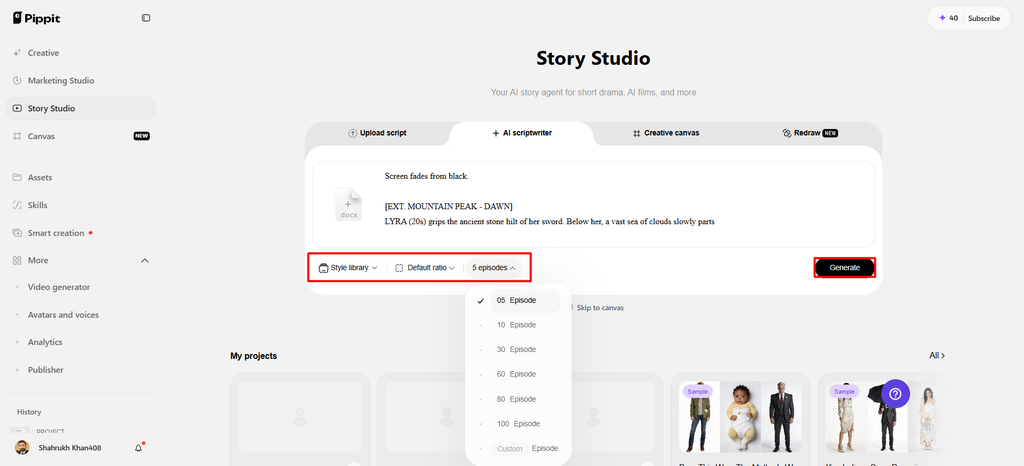
- Choose a suitable visual treatment through “Style library”, located beneath the dialogue box for planning.
- Click “Default ratio” to choose your custom aspect ratio, then use “Episodes” to set episodes.
- Finally, click “Generate” so Pippit turns your script into structured planning episodes for your project.
Step 2: Arrange characters and scene assets
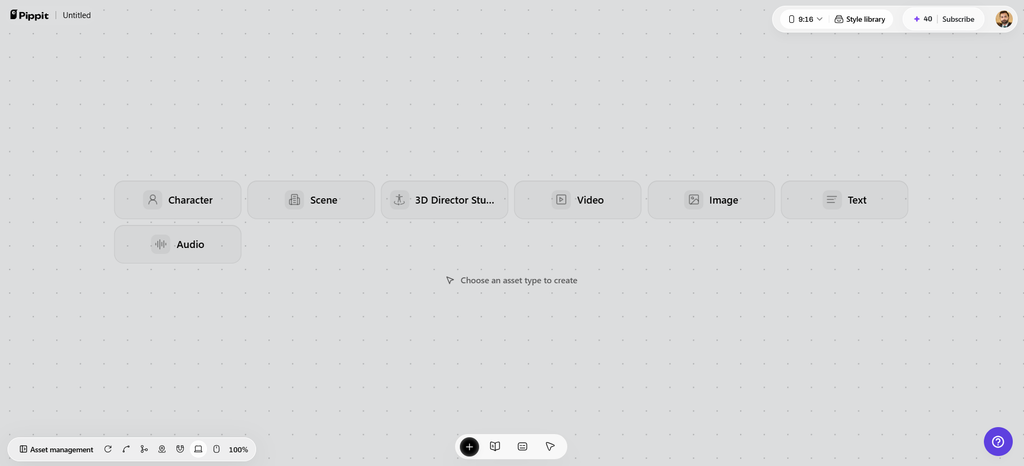
- Add images, scene videos, audio, and character roles through “Creative Canvas” for precise layout control.
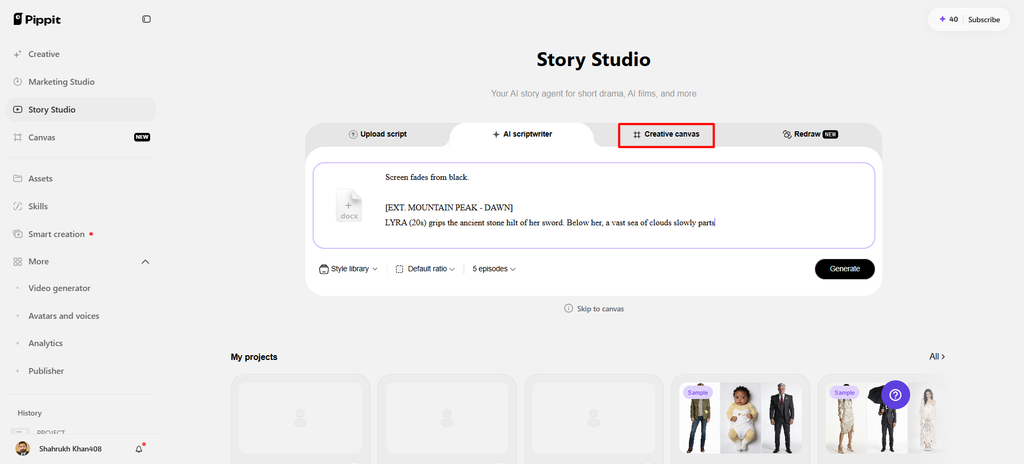
- Write prompts for sections, describing character appearance, setting, lighting, camera angle, style, voice, mood, and context.
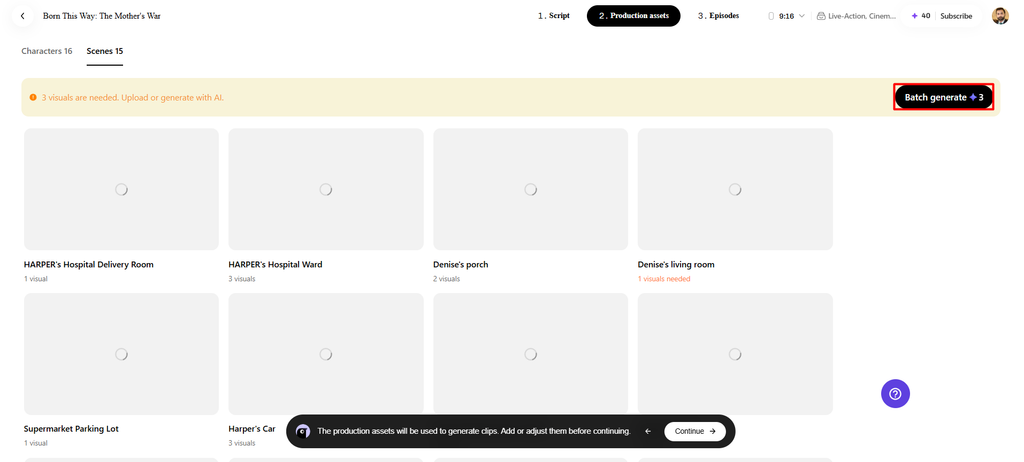
- After assigning roles and generating characters and scenes, click “Batch generate” to produce episodes together.
Step 3: Verify character and prop placement
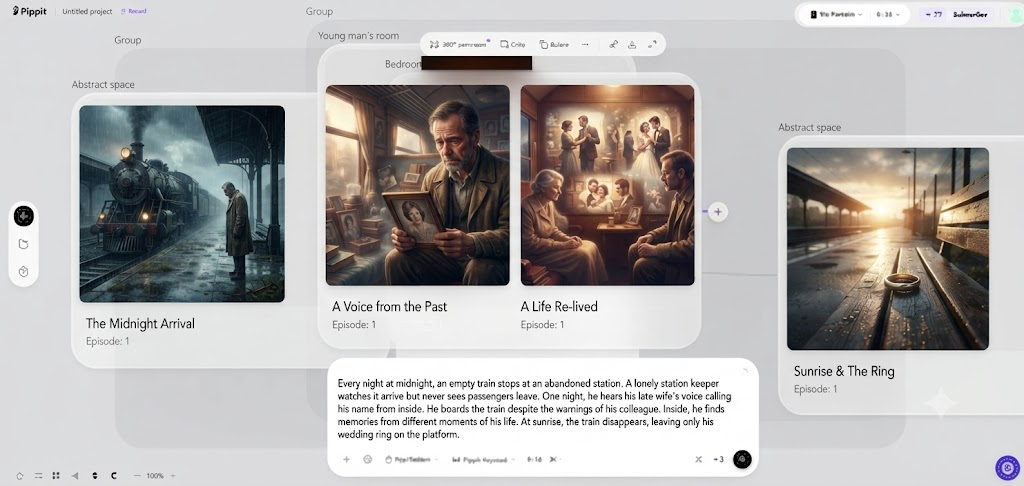
- Review each episode and refine characters, roles, scenes, audio, and other elements before confirming placements.
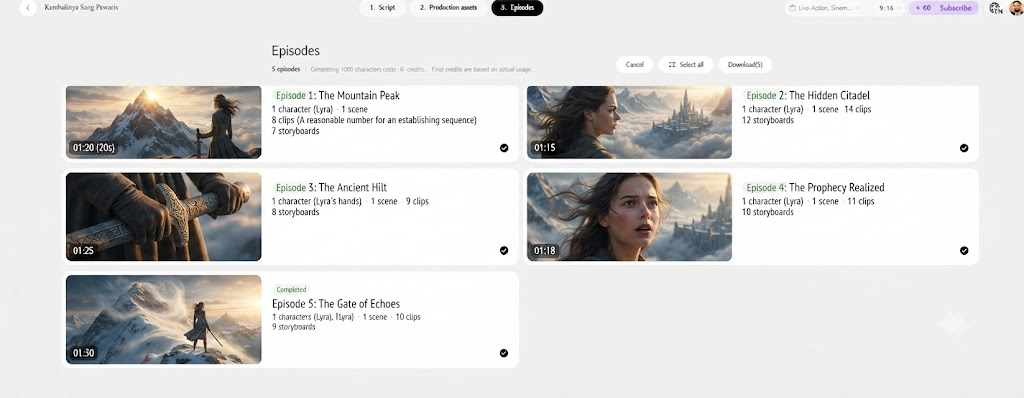
- When satisfied, click “Select all”, then choose “Download” to save episodes directly to your device.
Practical Layout Rules for More Controlled 3D Composition
When each scene has the same spatial logic, strong layout decisions are easier to make. Fill primary areas first, secondary areas second – primary areas guide secondary areas. Don’t fill in all the space; try to leave negative space, particularly around faces, products, and key actions—separate competing subjects by using meaningful depth within foreground, middle-ground, and background elements. Use relative scale by referring to characters and props to other nearby environmental features. Allow camera position to affect layout, as perspective will affect size, overlap, visibility and visual priority. Lastly, look at the whole picture and not each object. These rules can be followed in Pippit workflows for promotional scenes and product presentations.
From Layout Control to Complete Scene Direction
If placement is used in conjunction with full scene direction, then spatial control is more useful. A planned layout can affect the framing of the picture by positioning subjects in the frame where they are planned. Character placement can help to explain interactions, and product positioning can help to keep important details in view during a shot. Multiple layers can enhance depth and aid in environmental storytelling without cluttering the frame. Also, when shots share characters, props, and/or locations, consistent positions help maintain continuity. These decisions can impact transition planning, as transitions require having a starting position that can be moved. Pippit facilitates the organization of stories, visual resources, characters, scenes, and production elements. The aim is to have a plan through the narrative that is connected.
- Camera framing: Position subjects so that the intended point of view can convey what is going on.
- Character interactions: Allow for space for movement, facing direction, and meaningful exchanges.
- Product visibility: Place products in such a way that product attributes are not overshadowed in all shots but are still visible.
- Visual hierarchy: Arrange elements so that primary ones stand out from secondary ones through placement and scale.
- Layer foreground, middle ground, and background elements to avoid flat compositions (scene depth).
- Environmental storytelling: Communicate context with props and architecture but not too much clutter.
- Continuous shots: Maintain significant spatial relationships in a change of shot or camera angle.
- Transition planning: Before planning the movement between shots, consider starting and ending positions.
Conclusion
With layout control, 3D generation becomes conscious spatial direction. Distances, scale, relationship, and perspective of the camera position determine the clarity of the scene. World-model concepts reported are based on connected environments in which characters, objects, viewpoints, and context collaborate. These concepts still do not dovetail into the public tools until release status is confirmed. Pippit is a practical workflow tool for structuring stories, characters, scenes, audio, and visual production assets. Set up the main subject, maintain negative space, maintain depth, and maintain camera relationships. These choices can aid the story and the visibility of the products, help with the continuity of shots, and help with the direction of the scene for a purpose.