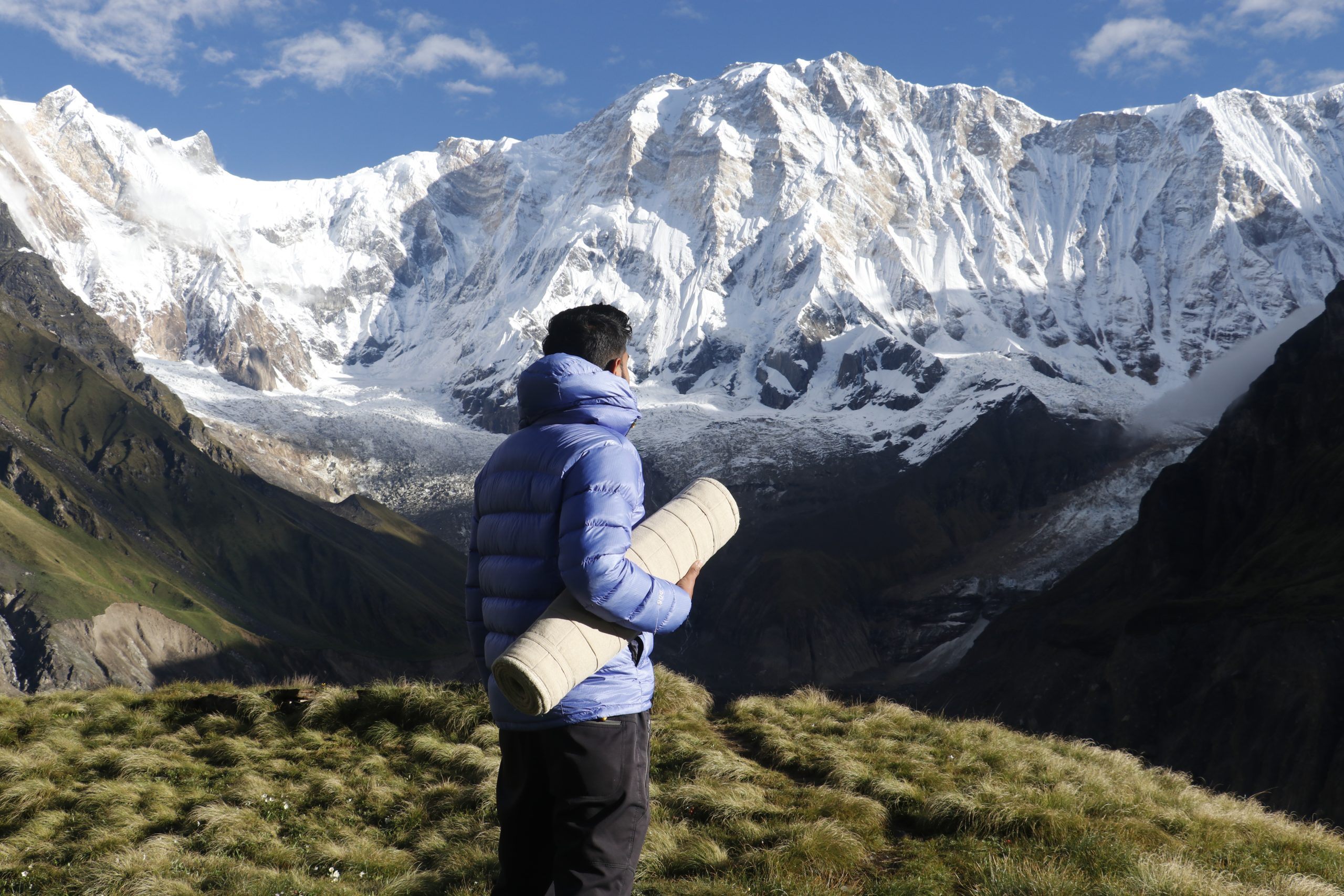
The Annapurna Base Camp (ABC) isn’t your usual run-of-the-mill mountain trek – It’s a journey of a lifetime that not only takes you deep in the Himalayas but through one of the most attention-grabbing experiences that Nepal has to offer. and the native means of living. Hidden at the back of the giants of the Annapurna Conservation Area, this classical hike is an awesome combination of natural beauty, records, and personal victory.
So whether you’re an experienced or a beginner hiker, trekking to the Annapurna Base Camp Hike can be an unforgettable adventure for you if you are a bit smart and while you are acquainted with what comes next on the path. Here’s the way to ensure your trip is one for the ages.
Prepare Your Mind and Body
It is by no means the most difficult trek in Nepal, but you must be mentally strong, as well as physically fit, to handle it. Within 5 to 12 days, you’ll be walking above 4,000 meters; doing many days of up and down trekking for hours on rock, often steep, rocky paths and undulating trails.
Start training at least 4 to 6 weeks before the commencement of your trek. You should be working with regular cardio, strength work, and long rucks to get your body ready. And be sure to work on patience and mental toughness. Trekking is not a race — it is the walk, the sights, the people you meet en route.
Choose the Right Season
You can’t tend to the timing. The ideal season to the Annapurna Base Camp Trekking would be before the monsoon (March-May) or after the monsoon (September–November). This is the cream of the months where you can enjoy the beautiful view of the mountain, where you also do not feel the cold much with rhododendron blooms (mostly in the spring).
Try to avoid visiting during the monsoon season (June to August) unless you’re into leeches, slick trails, and limited visibility. December – February (Winter) (December to February) is OK and cold in higher elevations, with a part of the trek covered with snow, and tea-houses are closed.
Pack Light, Not Heavy
Related Rashguards are going to feel like rashguards, and that may make all the difference in how comfortable and safe you feel. Generally stick to basics, as you will be experiencing a range of altitudes and climates. Some must-haves include:
- Suitable Hiking Boots (Good as in Used!)
- Insulated and layered (It gets cold at night)
- Lightweight rain gear
- Down jacket and long johns.
- Sunscreen, sunglasses, and a hat
- Water and water purification tablets or iodine (you may use your filter on your bottle)
- Trekking poles (helpful on descents)
Most importantly, your backpack shouldn’t be too heavy ~ 10/12kgs (if you are trekking on your backpack). On the day, if you will be with a porter, though, do keep within weight specifications (I advocate up to say 15-20kg).
Take It Slow and Acclimatize
Acute mountain sickness can afflict the fittest among you. Anyway, with the ABC trek, you don’t go up as high as the EBC trek, but of course, you go well above 4000 meters.
Be affected person, hydrate, and concentrate on what your body is attempting to tell you. By means of building rest days into your schedule — and not overloading the one days with a very bold agenda — your body can slowly adapt to the altitude, making for a more secure, more exciting trip. In case you experience dizzy, nauseous, or low, inform your manual immediately.
Immerse Yourself in the Culture
One of the special things about the ABC trek is that it’s short on culture. You’ll walk through Gurung and Magar villages, including the old Ghandruk and Chhomrong, which have maintained their traditions.
Hanging out in neighborhood tea houses to gossip with the owners. Taste of some Nepali foods: dal bhat, momo, and thukpa. Make the effort to speak a few words of NEPALI -be it only a “Namaste” – mouths will lift into wide smiles, which leads to an exchange on another plane.
And after you penetrate this native culture, the trek has a soul; it becomes more than just touring through, more than being the conquering warrior of the countryside.
BOOK A GOOD GUIDE OR OUTFIT
You can do it independently, trek without a guide or with a guide, or, better yet, in a small group, which can significantly enrich the experience. The best guides not only keep you safe and make sure things happen, but also offer up insights and perspectives you wouldn’t find in a Lonely Planet guidebook.
Part of their existence is to do that, to help bridge that gap between foreign cultures anthe d host culture, as a representative to the host nation community. And when hiking with a guide, the ability to read the rock can result in less fear, more time to look around, and enjoy the surroundings.
And if you’re the type of person who sets out on the trail alone, bring a map that covers licensure, emergency contact, and, even better, a satellite communicator.
Stay Present and Disconnect
“There is seldom such an opportunity to come back in so completely disconnected a way.” The Wi-Fi in some tea houses is weak and oh so spotty. Instead of scrolling, scritch-scratch your pen in a journal, bid the sun hello as it rises over Machapuchare, or strike up a conversation with your trek-mates around the fire.
Mountain time — early mornings, long walks, simple meals, silence at night. During slower moments, this is when the trek’s magic tends to come alive.
Not sitting here behind the lens eitherCapture a Moment ReyesImageSharpDressed ImageCapture the Moment ImageCherish but no sitting behind the lens;))Warm regardsShar..
The eye candy of the ABC trek is perfect: terraced fields, glacial rivers, and massive peaks (including Annapurna I, Hiunchuli, and peak Machapuchare). Bring a good camera (and use your phone to shoot photos, the camera for the good ones), but never just stand back and take it in.
It’s the ones we don’t photograph that we remember best: the sound of prayer flags snapping in the breeze, a cup of hot tea clearing our sinuses after climbing high, laughter around a candlelit dining room.
Final Thoughts
The ABC trek is not about getting your body acclimated — it’s about getting you acclimated. You ascend, in your own infinitely incremental, mongrel way, toward those mountains, and, often, toward more perfect knowledge of how the you inside you ticks.
As long as you show up with even a little preparation, an open heart, and a spirit of adventure, you won’t just go home with unrepeatable images; you’ll go home with stories, friends, and memories that can’t be held in the negative space of just a few weeks yomping around the world.
Happy walking — and may the mountains grant you open trails and clear skies.