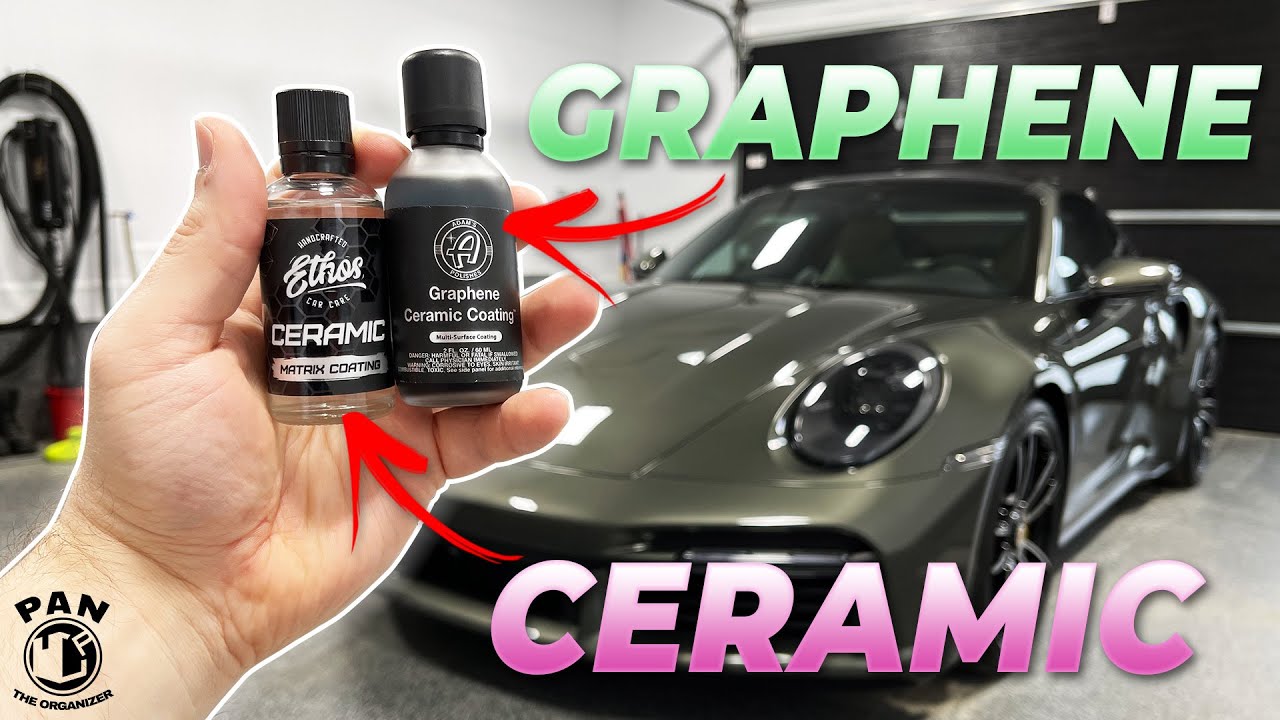
These days, a lot of car owners would rather take care of their cars themselves than go to detailing studios for every little thing. It’s now much easier to apply graphene coating at home because DIY detailing products are so easy to find. The steps are almost the same as those in a ceramic coating kit, so people who have used one before will find the process very familiar.
Professional detailing still gives the best finish, but if you are patient and follow the steps carefully, you can get very good results at home too. Preparation, patience, and the right application are the most important parts of the whole process.
Understanding Graphene Coating Before You Start
Graphene coating is a new way to protect the paint job of a car. It provides a protective layer on top of the paint job. It shields the paint job from UV rays, oxidation, light stains, and water spots. In addition to protecting the car, it also makes it shine more. It smoothens the surface so water and dust don’t stick to it.
Graphene coating is believed to be more effective than any other coatings. The process of using it, however, is quite similar to using a ceramic coating kit. That is why many car enthusiasts prefer to do it on their own.
Step 1: Get Everything You Need
Before you begin, you should get everything you need. You need a bucket, water, graphene coating liquid, microfiber cloths, applicator pads, and car shampoo. You can use the ones provided with a ceramic coating kit.
It is best to have a clean and shady area for this. You should avoid direct exposure to the sun. It might cause the graphene to dry quickly, leaving unwanted marks. You should avoid a dusty area as well. Dust might settle on the surface of the car while you are applying the graphene.
Step 2: Clean the car the right way
The most crucial part of this process is cleaning the car.
Use a good car shampoo and wash the car carefully. Make sure to wash those areas where dirt tends to accumulate, like door handles, badges, mirrors, and panels. After washing the car, make sure to rinse it properly and then dry it with a clean microfiber towel.
The graphene coating will stick much better to the car’s paint.
Step 3: Get the Surface Ready for Painting
The next thing to do is to get the surface ready after washing and drying the car. Before applying the coating, make sure to remove any imperfections on the car’s paint, like swirl marks, scratches, or old wax residue.
You may smooth out the car’s surface using a gentle polish or a paint cleaner. This is also recommended in most ceramic coating kits because it’s guaranteed that a coating will stick much better to a smooth surface.
If you fail to do this step, it’s likely that the coating will not stick properly to the car’s paint, resulting in an uneven finish.
Step 4: Put on the Graphene Coating
The next thing to do is the most important part in this tutorial on how to apply graphene coating on a car’s paint. Put a little graphene coating on the applicator pad and rub it on the car’s surface. Unlike other coatings, it’s not advisable to apply it on the entire car’s surface at once but rather on small parts at a time.
When applying the coating on the car’s surface, make sure to follow a cross pattern: horizontal strokes followed by vertical strokes. Make sure not to apply too much coating because it may become harder to buff it later on.
As the product instructions state, allow the coating to dry for a while, giving it time to bond to the paint.
Step 5: Polish the Surface
After the coating has dried slightly, rub the surface using a microfiber cloth. This will remove excess coating from the surface, making it smooth.
While polishing, it is imperative to avoid rubbing the surface hard. In case you notice marks, you can wipe them off using a cloth until the surface is smooth and clear.
This step is almost similar to the previous step when using the ceramic coating kit.
Step 6: Wait for the coating to dry
It is imperative to allow the car time to dry. This is the time when the car should not be exposed to water, dust, or sunshine for at least 24 hours, as instructed by the product.
During this time, the coating dries, creating a hard film over the car’s painting. This makes the car last longer.
Step 7: After Applying, Take Care of It
Taking care of the car is not hard once the graphene coating is applied. This is due to the waterproof and dust-proof nature of the car’s surface, which makes it look clean at all times.
However, it is imperative to wash the car using a microfiber cloth and mild car shampoo. It is also imperative to avoid using chemicals or rough brushes, which might damage the coating over time.
Conclusion
If you follow the steps carefully, you can definitely use a ceramic coating kit to put graphene coating on at home. The most important things are washing it properly, getting the surface ready, applying it carefully, and giving it enough time to cure.
Professional detailing may give you more accurate results, but a DIY job done with care can still give you great protection, shine, and a smooth finish. Applying graphene coating at home can be both satisfying and cost-effective for car owners who like to take care of their own cars.